Insecticides

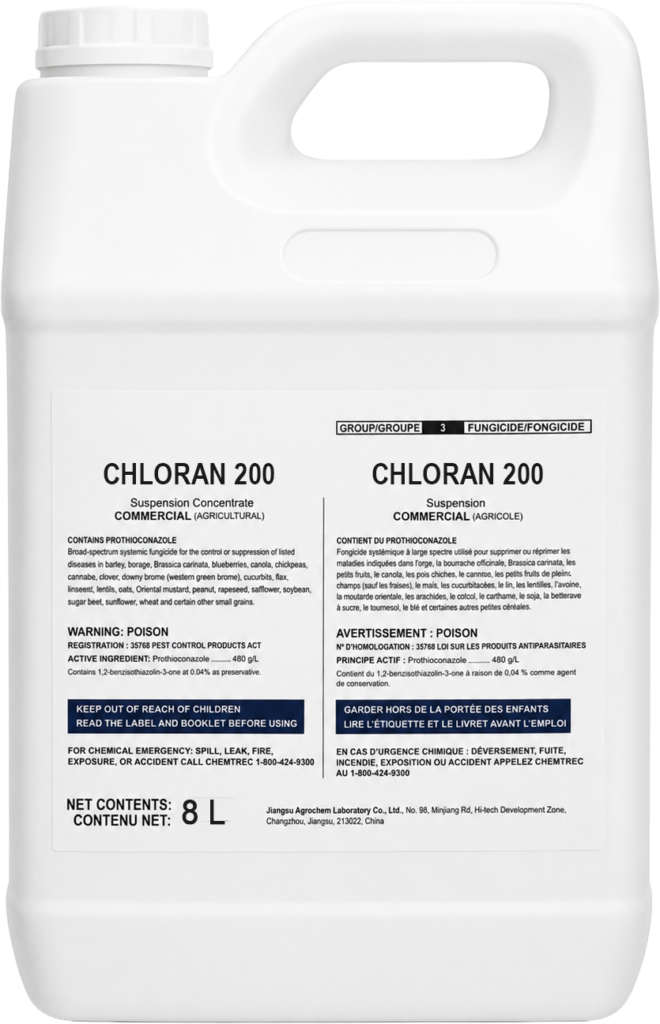
Chloran 200 SC

A Group 28 insecticide for control of key insect pests in field, vegetable and specialty crops.

Active Ingredient

Chlorantraniliprole 200 g/L

Formulation

Suspension concentrate (SC)

Group

Group 28

Product Type

Insecticide

Packaging

2 x 8 L Jugs/Case

Registration

N/A

Chloran 200 SC

Chloran 200 SC is a foliar insecticide used to control several important chewing insects. It is mixed with water and applied to labelled crops by ground equipment. Aerial application is also allowed on crops specified on the label.

· Controls several important chewing insect pests.

· Registered on a wide range of field and vegetable crops.

· Can be applied by ground, with aerial use on specified crops.

· Fits into a scouting-based insect management program.

Apply when scouting shows that insect numbers have reached the local treatment threshold. Use enough water to give the crop thorough and even coverage. Rates, application intervals, seasonal limits and pre-harvest intervals are different for each crop, so follow the crop section of the label.

Potatoes and other root and tuber vegetables, leafy vegetables, brassica vegetables, pulses, fruiting vegetables, cucurbits, corn, cereals, oilseeds, forage crops and other labelled specialty crops.

Colorado potato beetle, European corn borer, diamondback moth, imported cabbageworm, cabbage looper, black cutworm, armyworm, fall armyworm, beet armyworm, corn earworm, grasshoppers, hornworms, swede midge and listed leafminers. The insects controlled depend on the crop.

Related Education Articles

Glyphosate Resistant Kochia

Since kochia cross-pollenates easily, is a tumbleweed, and has wind-blown pollen, it is difficult to know if the glyphosate resistance found in western Canada was introduced from elsewhere, or if it evolved independently at the various sites already confirmed.    Learn More >>

Spray early: Economics of early weed control

Early in-crop weed control will yield more than late control almost all the time. Early-emerging weeds tie up nutrients and moisture valuable to the crop. They also out-compete the crop for sunlight if their leaves cover canola seedlings.    Learn More >>